

Petit Verdot may not be the most familiar grape on the wine list, but for those who discover it, it often becomes a favorite. Known for its deep color, bold structure, and intense aromatics, Petit Verdot delivers a powerful yet surprisingly refined wine—especially when grown in cool, maritime climates.
In this Petit Verdot wine guide, we’ll explore the grape’s history, flavor profile, global role, and why it thrives on the North Fork of Long Island. Whether you’re encountering Petit Verdot for the first time or revisiting it with fresh perspective, this guide will help you understand what makes this grape so distinctive.

Petit Verdot originates in Bordeaux, France, where it has traditionally played a supporting role in classic red blends alongside Cabernet Sauvignon, Merlot, Cabernet Franc, and Malbec. Its name translates to “little green,” a reference to the grape’s tendency to ripen late and unevenly in Bordeaux’s cool, unpredictable climate.
Because Petit Verdot ripens later than other Bordeaux varieties, it was often used sparingly—added in small amounts to blends to deepen color, increase tannin, and enhance aromatic complexity. In years when it fully ripened, however, Petit Verdot proved capable of producing wines with remarkable intensity and longevity.
As winemaking expanded beyond France, growers discovered that Petit Verdot performs exceptionally well in regions with long growing seasons and consistent warmth balanced by cooling influences. Today, it’s planted in select regions around the world and is increasingly bottled on its own, allowing its bold personality to take center stage.
Fun Fact: Petit Verdot is one of the most deeply colored red grapes in the world, often used to boost color and structure in blends—even in very small amounts.
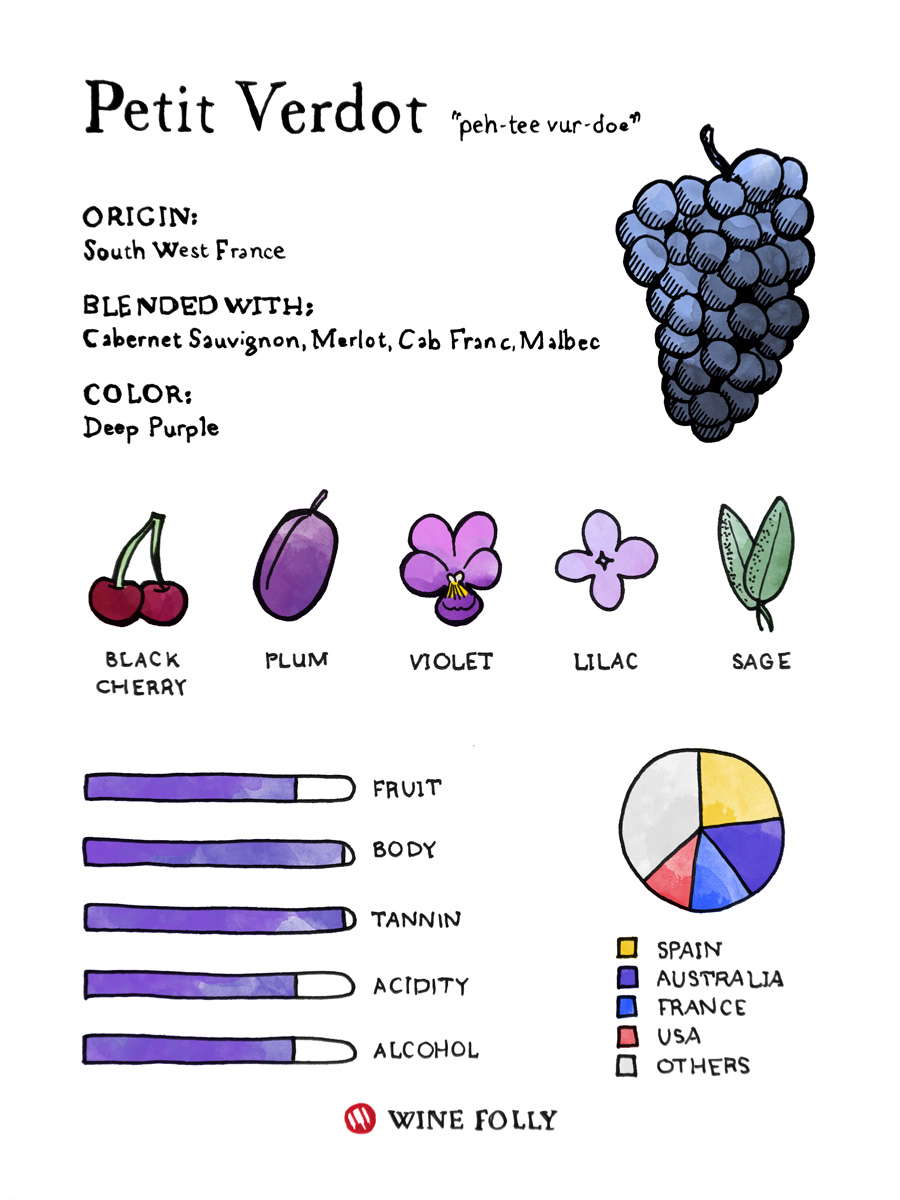
While Bordeaux remains Petit Verdot’s historic home, the grape has found success in other regions where it can reliably ripen.
France (Bordeaux) – Used primarily as a blending grape to add structure, color, and spice.
Spain & Southern Europe – Often produces bold, full-bodied wines with ripe fruit and firm tannins.
California & Washington – Shows dark fruit, richness, and a more approachable structure in warmer climates.
Cool Maritime Regions (Like Long Island) – Balance is key—Petit Verdot retains freshness while developing depth, making it especially compelling as a varietal wine.

Petit Verdot is known for its intensity and structure, but it offers more nuance than its reputation suggests. Typical flavor and aroma notes include:
Dark fruits like blackberry, plum, and black cherry
Violet and floral aromas
Baking spice, black pepper, and clove
Subtle herbal or graphite notes
Firm tannins with a long, structured finish
Despite its power, well-made Petit Verdot maintains balance. In cooler climates, the grape retains freshness and acidity, preventing the wine from feeling heavy while allowing complex flavors to unfold with time.

While Petit Verdot is naturally bold, it doesn’t have to feel overwhelming. Climate, harvest timing, and winemaking choices all shape the final style.
In cooler regions, slower ripening preserves acidity and aromatics, resulting in wines that feel structured but polished. These wines benefit from decanting when young and often age beautifully, gaining elegance and depth over time.
Petit Verdot’s late ripening makes site selection critical. The North Fork’s maritime climate—moderated by surrounding water—extends the growing season while avoiding extreme heat. This balance allows Petit Verdot to reach full phenolic ripeness without losing acidity.
Here, Petit Verdot develops deep color, layered aromatics, and firm yet refined tannins. The result is a wine that feels powerful but controlled, expressive yet food-friendly.

Thanks to its structure and depth, Petit Verdot pairs beautifully with rich, savory dishes, including:
Grilled or roasted red meats
Braised short ribs or lamb
Mushroom-forward dishes
Aged cheeses
Herb-crusted meats and hearty stews
Its tannins soften alongside protein-rich foods, while its acidity keeps each bite feeling balanced.
At Rooted North Vineyards, our Petit Verdot showcases the grape’s bold character while honoring balance and place. Grown in a cool maritime climate and crafted with intention, it reflects both vineyard-driven intensity and thoughtful winemaking.
Whether you’re discovering Petit Verdot for the first time or deepening your appreciation, our expression offers a compelling look at what this grape can achieve on the North Fork.
Taste it in our tasting room or explore it as part of your next wine experience—this is Petit Verdot with both power and poise.

